
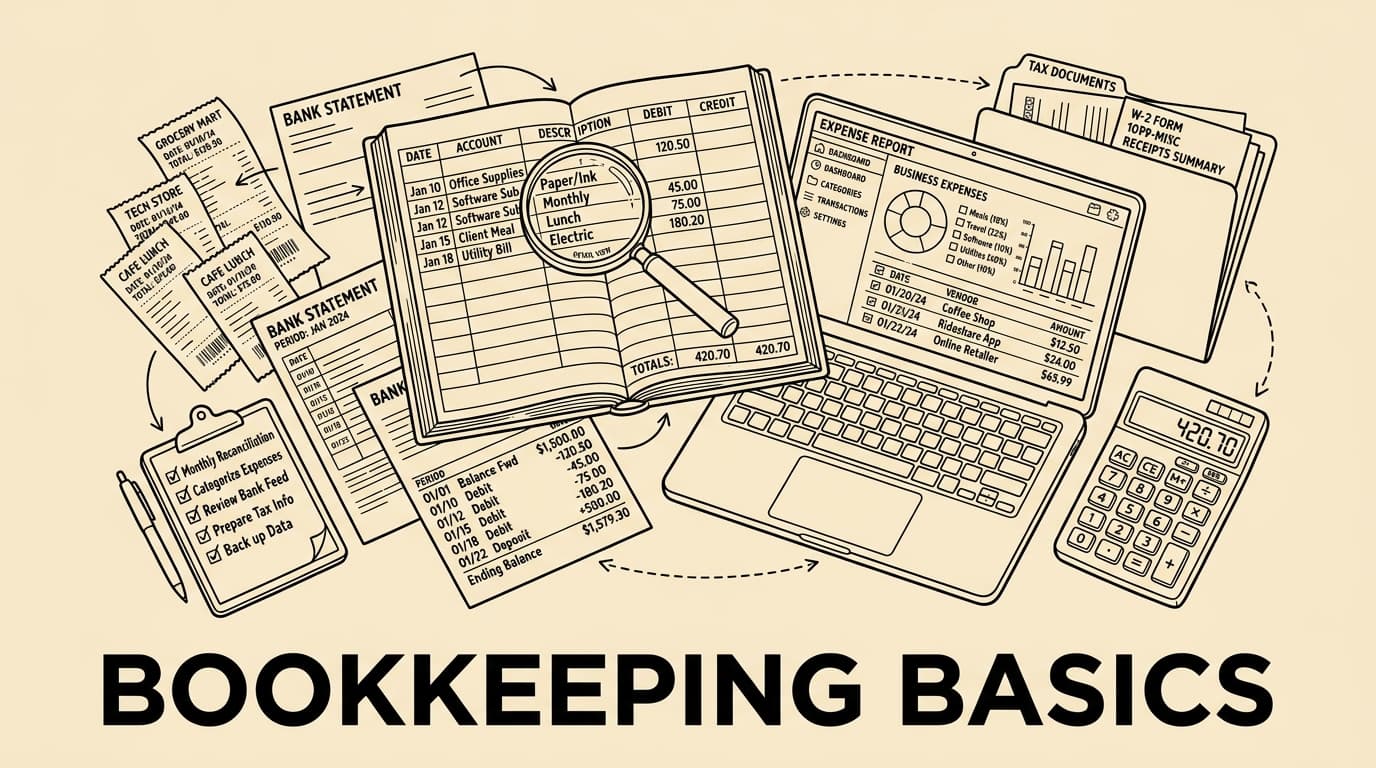
Bookkeeping basics for small business are easiest to understand when you treat them as a weekly operating habit rather than an annual tax scramble. Clean books tell you which customers are profitable, which expenses are rising, when cash gets tight, and which documents your accountant still needs. This guide explains the practical foundations: separating accounts, choosing useful expense categories, capturing receipts, reconciling statements, preparing tax evidence, and building a repeatable month-end routine.
Why bookkeeping discipline matters early
For a small business, bookkeeping is not only a compliance task. It is the operating system for cash flow, pricing, tax planning, and trust. The practical goal is simple: every transaction should show what happened, who approved it, which category it belongs to, which evidence supports it, and whether it has been reconciled against the bank or card account. When that chain is complete, decisions become faster and audits become less stressful. Use categories that match how the business is managed: software, travel, meals, subcontractors, office equipment, bank fees, insurance, marketing, and professional services. Avoid vague buckets such as miscellaneous. A useful category is one that helps the owner understand margin and helps the accountant prepare tax returns without guessing. Store amounts in EUR, GBP, USD where relevant and keep original currencies visible. Keep VAT, sales tax, GST, and income-tax evidence in one consistent system, especially if your business works across borders.
Separate business and private spending
For a small business, bookkeeping is not only a compliance task. It is the operating system for cash flow, pricing, tax planning, and trust. The practical goal is simple: every transaction should show what happened, who approved it, which category it belongs to, which evidence supports it, and whether it has been reconciled against the bank or card account. When that chain is complete, decisions become faster and audits become less stressful. Use categories that match how the business is managed: software, travel, meals, subcontractors, office equipment, bank fees, insurance, marketing, and professional services. Avoid vague buckets such as miscellaneous. A useful category is one that helps the owner understand margin and helps the accountant prepare tax returns without guessing. Store amounts in EUR, GBP, USD where relevant and keep original currencies visible. Keep VAT, sales tax, GST, and income-tax evidence in one consistent system, especially if your business works across borders.
Create a practical chart of accounts
For a small business, bookkeeping is not only a compliance task. It is the operating system for cash flow, pricing, tax planning, and trust. The practical goal is simple: every transaction should show what happened, who approved it, which category it belongs to, which evidence supports it, and whether it has been reconciled against the bank or card account. When that chain is complete, decisions become faster and audits become less stressful. Use categories that match how the business is managed: software, travel, meals, subcontractors, office equipment, bank fees, insurance, marketing, and professional services. Avoid vague buckets such as miscellaneous. A useful category is one that helps the owner understand margin and helps the accountant prepare tax returns without guessing. Store amounts in EUR, GBP, USD where relevant and keep original currencies visible. Keep VAT, sales tax, GST, and income-tax evidence in one consistent system, especially if your business works across borders.
- Define a clear owner for the step.
- Keep the original document linked to the transaction.
- Review exceptions before month end.
Capture receipts before they disappear
For a small business, bookkeeping is not only a compliance task. It is the operating system for cash flow, pricing, tax planning, and trust. The practical goal is simple: every transaction should show what happened, who approved it, which category it belongs to, which evidence supports it, and whether it has been reconciled against the bank or card account. When that chain is complete, decisions become faster and audits become less stressful. Use categories that match how the business is managed: software, travel, meals, subcontractors, office equipment, bank fees, insurance, marketing, and professional services. Avoid vague buckets such as miscellaneous. A useful category is one that helps the owner understand margin and helps the accountant prepare tax returns without guessing. Store amounts in EUR, GBP, USD where relevant and keep original currencies visible. Keep VAT, sales tax, GST, and income-tax evidence in one consistent system, especially if your business works across borders.
Reconcile every month
For a small business, bookkeeping is not only a compliance task. It is the operating system for cash flow, pricing, tax planning, and trust. The practical goal is simple: every transaction should show what happened, who approved it, which category it belongs to, which evidence supports it, and whether it has been reconciled against the bank or card account. When that chain is complete, decisions become faster and audits become less stressful. Use categories that match how the business is managed: software, travel, meals, subcontractors, office equipment, bank fees, insurance, marketing, and professional services. Avoid vague buckets such as miscellaneous. A useful category is one that helps the owner understand margin and helps the accountant prepare tax returns without guessing. Store amounts in EUR, GBP, USD where relevant and keep original currencies visible. Keep VAT, sales tax, GST, and income-tax evidence in one consistent system, especially if your business works across borders.
Understand tax and VAT evidence
For a small business, bookkeeping is not only a compliance task. It is the operating system for cash flow, pricing, tax planning, and trust. The practical goal is simple: every transaction should show what happened, who approved it, which category it belongs to, which evidence supports it, and whether it has been reconciled against the bank or card account. When that chain is complete, decisions become faster and audits become less stressful. Use categories that match how the business is managed: software, travel, meals, subcontractors, office equipment, bank fees, insurance, marketing, and professional services. Avoid vague buckets such as miscellaneous. A useful category is one that helps the owner understand margin and helps the accountant prepare tax returns without guessing. Store amounts in EUR, GBP, USD where relevant and keep original currencies visible. Keep VAT, sales tax, GST, and income-tax evidence in one consistent system, especially if your business works across borders.
Set approval rules before growth
For a small business, bookkeeping is not only a compliance task. It is the operating system for cash flow, pricing, tax planning, and trust. The practical goal is simple: every transaction should show what happened, who approved it, which category it belongs to, which evidence supports it, and whether it has been reconciled against the bank or card account. When that chain is complete, decisions become faster and audits become less stressful. Use categories that match how the business is managed: software, travel, meals, subcontractors, office equipment, bank fees, insurance, marketing, and professional services. Avoid vague buckets such as miscellaneous. A useful category is one that helps the owner understand margin and helps the accountant prepare tax returns without guessing. Store amounts in EUR, GBP, USD where relevant and keep original currencies visible. Keep VAT, sales tax, GST, and income-tax evidence in one consistent system, especially if your business works across borders.
- Define a clear owner for the step.
- Keep the original document linked to the transaction.
- Review exceptions before month end.
Use automation without losing control
For a small business, bookkeeping is not only a compliance task. It is the operating system for cash flow, pricing, tax planning, and trust. The practical goal is simple: every transaction should show what happened, who approved it, which category it belongs to, which evidence supports it, and whether it has been reconciled against the bank or card account. When that chain is complete, decisions become faster and audits become less stressful. Use categories that match how the business is managed: software, travel, meals, subcontractors, office equipment, bank fees, insurance, marketing, and professional services. Avoid vague buckets such as miscellaneous. A useful category is one that helps the owner understand margin and helps the accountant prepare tax returns without guessing. Store amounts in EUR, GBP, USD where relevant and keep original currencies visible. Keep VAT, sales tax, GST, and income-tax evidence in one consistent system, especially if your business works across borders.
Common bookkeeping mistakes
For a small business, bookkeeping is not only a compliance task. It is the operating system for cash flow, pricing, tax planning, and trust. The practical goal is simple: every transaction should show what happened, who approved it, which category it belongs to, which evidence supports it, and whether it has been reconciled against the bank or card account. When that chain is complete, decisions become faster and audits become less stressful. Use categories that match how the business is managed: software, travel, meals, subcontractors, office equipment, bank fees, insurance, marketing, and professional services. Avoid vague buckets such as miscellaneous. A useful category is one that helps the owner understand margin and helps the accountant prepare tax returns without guessing. Store amounts in EUR, GBP, USD where relevant and keep original currencies visible. Keep VAT, sales tax, GST, and income-tax evidence in one consistent system, especially if your business works across borders.
Automation and controls
Tools like Bill.Dock can turn receipts, invoices, and expense reports into searchable records so your bookkeeping routine becomes faster and easier to audit.
| Routine | Owner | Evidence |
|---|---|---|
| Receipt capture | Employee or owner | Image, invoice number, date, amount |
| Review | Manager or finance | Policy match, category, project |
| Reconciliation | Bookkeeper | Bank or card transaction |
| Export | Finance | Accounting file and audit trail |
FAQ
What records should a small business keep?
Keep invoices, receipts, bank statements, card statements, payroll evidence, mileage records, contracts, and notes that explain unusual transactions.
How often should bookkeeping be updated?
Weekly capture and monthly reconciliation is a practical baseline. Waiting until year end creates missing evidence and expensive cleanup.
Can spreadsheets be enough?
A spreadsheet can work at the very beginning, but it becomes risky once several people submit expenses or VAT evidence must be reviewed.